Why Site Scouting Matters Before an Industrial Photography Shoot in Singapore
3-5 MINUTES READING TIME · 4 May 2026
Industrial photography is rarely done in a simple, controlled setting. A shoot often involve live operations, restricted access, safety briefings, cleanroom procedures, machinery, workers, branding requirements, and tight production schedules. This is why scouting, or site recce, is an important part of pre-shoot planning.
A good recce helps the photographer understand the environment before the actual shoot begins. It reduces guesswork, improves efficiency, and allows the client and photographer to plan around real site conditions instead of assumptions.
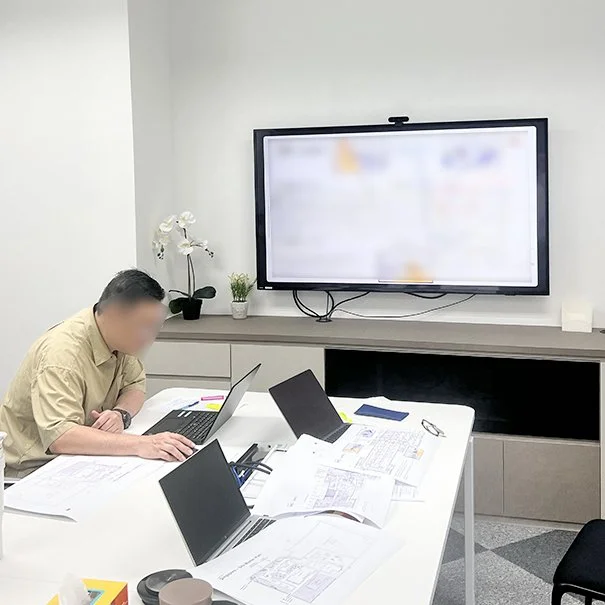
Meeting with client in their office after site recce
First Impressions Before Entering the Site
Before visiting the location, I usually start with Google Maps to get a first impression of the place. This helps me understand the surrounding roads, site entrance, building orientation, parking possibilities, nearby structures, and potential exterior angles.
For industrial estates, factories, warehouses, or construction sites in Singapore, this early check gives a useful visual overview. It does not replace an on-site recce, but it helps me arrive with a clearer sense of the environment.
Walking the Site to Understand Real Conditions
Before visiting the location, I usually start with Google Maps to get a first impression of the place. This helps me understand the surrounding roads, site entrance, building orientation, parking possibilities, nearby structures, and potential exterior angles.
For industrial estates, factories, shipyards, warehouses, or construction sites in Singapore, this early check gives a useful visual overview. It does not replace an on-site recce, but it helps me arrive with a clearer sense of the environment.
Planning the Route with Minimum Disruption
Industrial photography should not slow down the client’s operation unnecessarily. A recce allows me to plan the shooting sequence in a more efficient way.
This includes deciding which areas to cover first, how to move between locations, where tripod can be placed, and how to avoid interrupting workers or production flow. On a live work site, a clear route helps keep the shoot more organised, safer, and less stressful for everyone involved.
Checking Light, Weather, and Site-Specific Preparation
For exterior images, architecture, industrial buildings, and large facilities, sun direction and weather matter. In Singapore, lighting can change quickly because of cloud cover, tropical heat, rain, and haze. I usually monitor the local weather forecast during the week of the shoot so I can stay prepared.
Some new buildings may not receive strong east or west sunlight directly because of their orientation, surrounding structures, or site layout. Scouting helps identify when the façade, entrance, signage, or operational areas are likely to look their best.
For cleanroom or controlled environments, preparation time must also be considered. Different cleanroom levels may require different gowning procedures, fittings, access checks, or waiting time before photography can begin.
Planning for the Unexpected
Even with good planning, industrial sites can change. Equipment may move, access may be delayed, weather may shift, or a production area may become unavailable.
This is why contingency planning is important. A successful recce helps identify backup angles, alternative routes, safer working positions, and practical limitations in advance.
For most assignments, a two-hour on-site recce is usually sufficient, depending on the size of the place and the complexity of the brief. When scouting is done well, half the work is already completed. The actual shoot becomes more focused, controlled, and confident.
Why the Recce Matters Before Shoot Day
A good recce gives me a clearer visual direction of the surroundings before the actual shoot begins. By then, I have already seen the space, understood the light, checked the possible angles, and noted the site limitations.
This also helps me with my visualization, and work with more confidence on the shoot day. Instead of spending too much time figuring things out from scratch, I can focus on producing stronger images that show the manufacturing site clearly, safely, and professionally.
For the client, it also makes the shoot feel more controlled. The process becomes less about guessing on the day itself, and more about executing a plan that has already been tested against the real site conditions.
FAQ: Purpose of Photography Recce
Is a location recce needed for every industrial photography shoot?
Not always. For a simple shoot, a clear brief and reference images may be enough. For larger manufacturing sites, restricted-access areas, cleanrooms, exterior facility views, or tight schedules, a recce is usually helpful.
How long does an industrial photography recce usually take?
It depends on the site size and brief. For many assignments, a two-hour on-site recce is sufficient to understand the main areas, access, lighting, possible image angles and discussion with the client.
What should the client prepare before the recce?
A clear brief, key areas to cover, access instructions, PPE requirements, restricted zones accessibility, and a floor plan if available.
Why is a floor plan useful for manufacturing site photography?
A floor plan helps me understand how different areas connect before walking the site. It is useful for orientation and planning, but it is more of a helpful bonus than a must-have.
How does a recce help the actual shoot?
It helps reduce uncertainty. I can arrive on the shoot day with a clearer visual direction, better awareness of the site, and more confidence in how to produce the final image sequence.
For construction, infrastructure, and industrial photography in Singapore, Capture Asia Photography documents live working environments with attention to process, coordination, scale, and visual clarity.
View specific industrial work