Event Photography in Singapore: Working in Regulated, Corporate & Live Environments
5-6 MINUTES READING TIME . UPDATED 13 March 2026
This article explains how professional event photography operates within corporate, internal, and regulated environments in Singapore. It outlines what reliable coverage involves when events run on fixed schedules, access is controlled, and images are expected to be accurate, discreet, and usable beyond the event day.
Table of contents
Corporate events are not casual environments
Corporate and internal events operate within structured settings where expectations differ from public or lifestyle events. Photography often takes place alongside senior leadership, internal teams, or invited stakeholders, requiring awareness of protocol, tone, and context.
In these environments, the photographer’s role extends beyond capturing moments. Coverage must align with how the organisation presents itself, ensuring images feel appropriate for internal communication, reporting, and professional use rather than promotional spectacle.
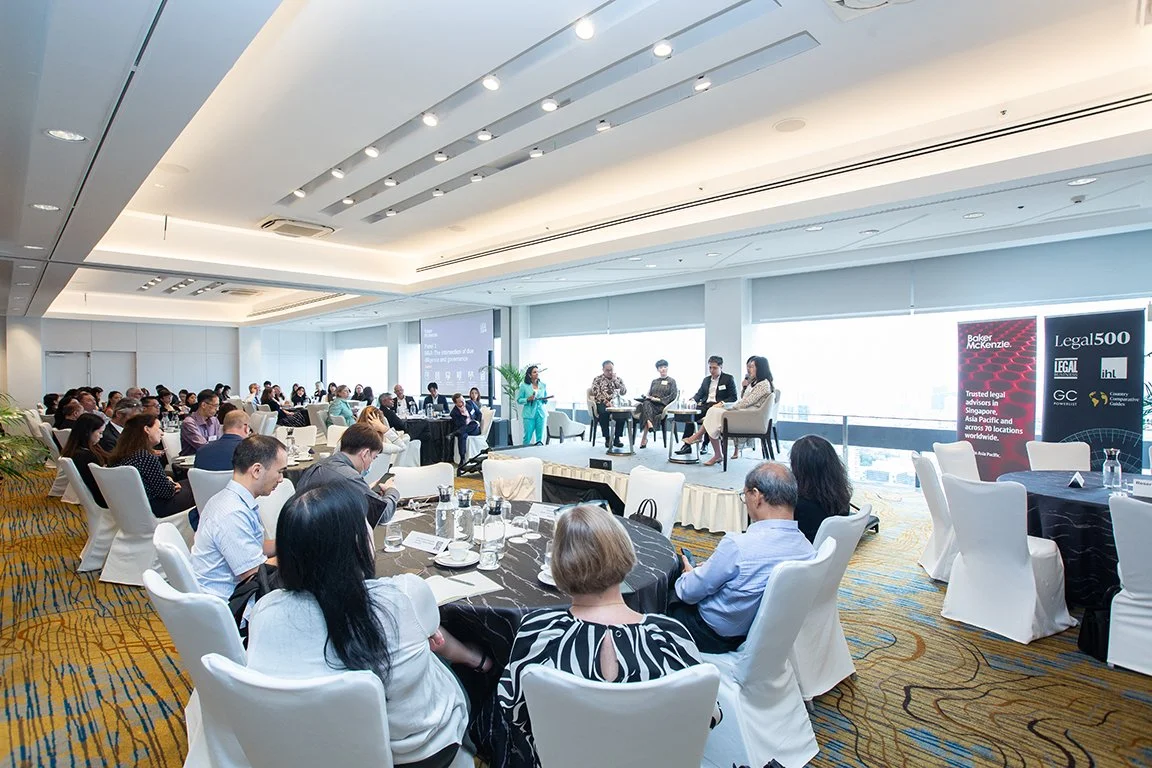
Internal corporate event held Swissôtel hotel, capturing wide view of the space and banners clearly.
Working within regulated and internal company settings
Many corporate events occur within regulated industries such as finance, law, pharmaceuticals, or internal company environments where discretion is essential. Photography must be carried out with an understanding that not everything visible is intended for documentation.
Experience in these settings helps ensure images are suitable for their intended audience. This includes recognising sensitive material, avoiding unnecessary exposure of confidential content, and producing visuals that organisations can share with confidence.
Live schedules, limited access, and real-time decisions
Corporate events typically follow fixed agendas with little flexibility. Sessions start and end on schedule, speakers move quickly, and key moments often happen once. Opportunities to repeat or recreate scenes are rare.
Event photography in these conditions relies on real-time judgement. Prioritising moments, adapting to changing light or lighting set-up, and navigating access limitations must happen smoothly and without disrupting proceedings. The focus is on capturing what matters as it unfolds.
Accuracy, consistency, and brand alignment
Event images are often used well beyond the day itself — in internal updates, corporate presentations, annual reports, external communications or Linkedin. For this reason, accuracy and consistency are critical.
Photography must reflect brand elements clearly and naturally, without exaggeration or distortion. Logos, stage design, and speaker positioning are documented as they appear, ensuring images remain credible and usable across different platforms and timeframes.
Planning before the event day
Effective coverage does not always mean extensive pre-event planning. In many cases, event itineraries are provided in advance, while detailed coordination happens on the day itself. For new venues, arriving early allows myself to understand the layout, access points, fire exits, lighting conditions, and how the run-of-show will unfold in practice.
This preparation reduces friction on the day, especially in environments where movement is restricted or timing is tight. It also ensures that key sessions and interactions are captured accurately without interfering with the event flow.
Capturing the essence of an event
Effective event photography goes beyond recording what happened. It involves observing how people interact, how energy shifts in the room, and how moments align with branding, space, and audience engagement.
Lighting decisions, positioning, and timing are made deliberately to bring balance to a scene — ensuring faces are clear, environments remain natural, and attention stays on the interaction rather than the camera. This allows photographs to feel polished without appearing staged or intrusive.
Equally important is knowing when to step in and when to stay invisible. During candid interactions, the focus is on anticipating expressions, body language, and moments of connection, while carefully choosing backgrounds that support the image — whether that includes signage, banners, event titles, or brand elements. For group photographs, brief adjustments to posture and positioning can be made efficiently, even under time pressure, to ensure images feel organised and professional without disrupting the schedule.
Alongside people-focused moments, documenting the atmosphere of the venue matters just as much. Wide views of the space, audience engagement, and overall event scale help complete the visual narrative, ensuring the final set of images reflects both the experience and the environment accurately.
Working with an experienced event photographer
Experience in corporate and regulated event environments helps ensure photography supports the event rather than adding complexity. Familiarity with professional settings, live schedules, and organisational expectations allows coverage to proceed predictably and discreetly.
To see how this approach translates into real-world assignments, you can view event photography projects through my portfolio. The work reflects actual corporate events and internal functions photographed under real operating conditions.
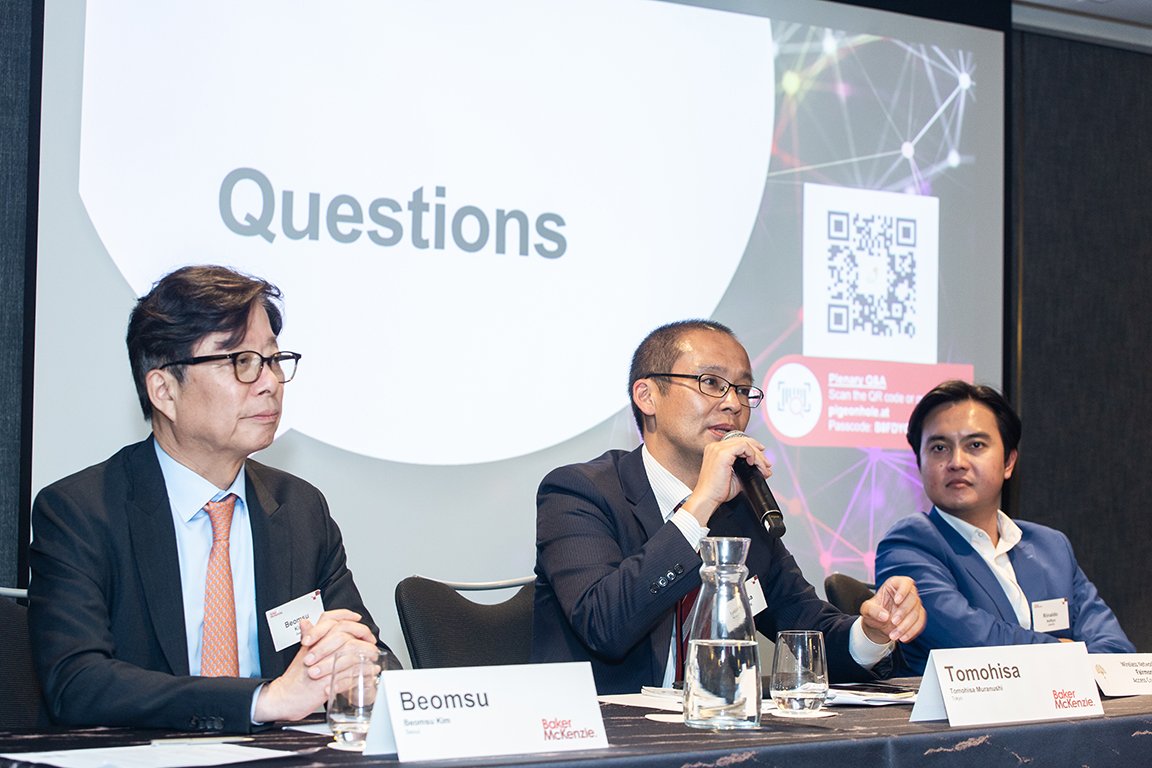
Capturing the moment of speakers answering question on stage.
Frequently Asked Questions
What makes corporate event photography different from public events?
Corporate event photography takes place in structured environments where professionalism, discretion, and accuracy matter. Images are often used for internal communication, corporate reporting, and long-term records, so coverage must reflect the event clearly without disrupting proceedings or misrepresenting the environment.
Can photography be done discreetly during internal company events?
Yes. In internal and regulated settings, photography is carried out unobtrusively to allow participants to engage naturally. This involves careful positioning, timing, and awareness of interactions so moments are captured without drawing attention or interrupting the flow of the event.
How are images typically used after corporate events?
Event images are commonly used across corporate websites, internal updates, presentations, annual reports, and external communications. Because images may be reused over time, clarity, consistency, and accurate representation are essential.