Photographing Modular Construction from Above: A Live HDB Installation Sequence
5-6 MINUTES READING TIME · 23 April 2026
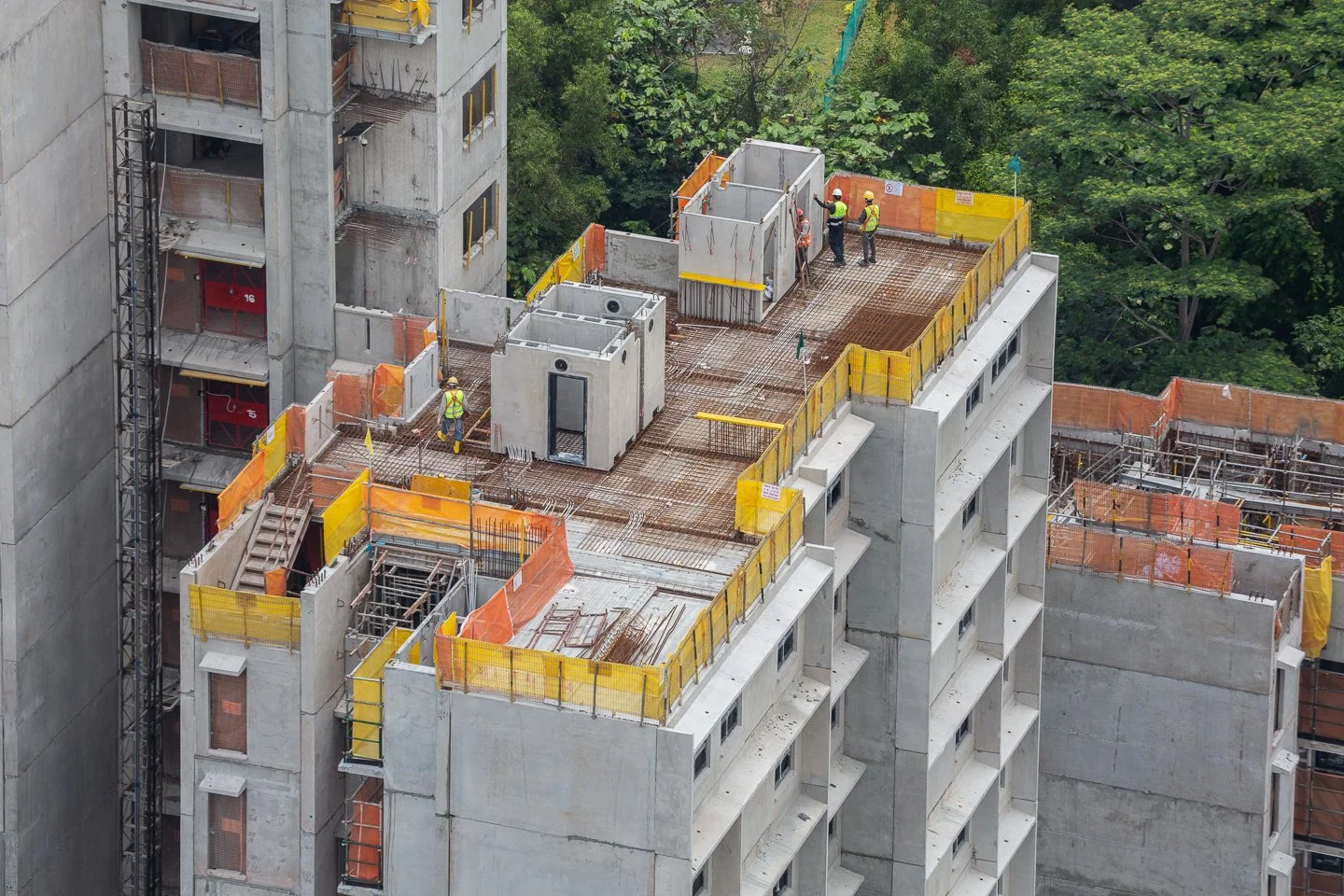
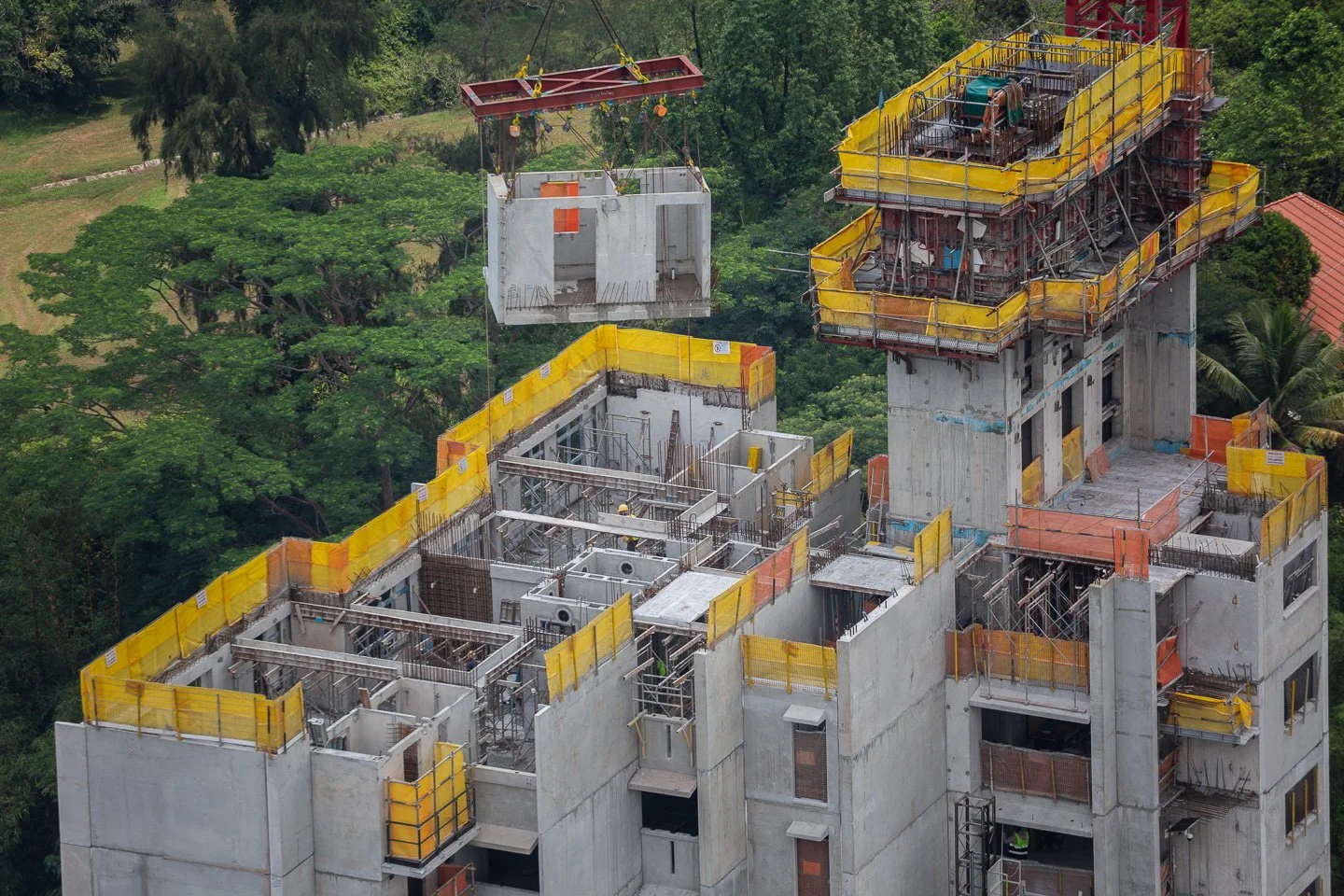
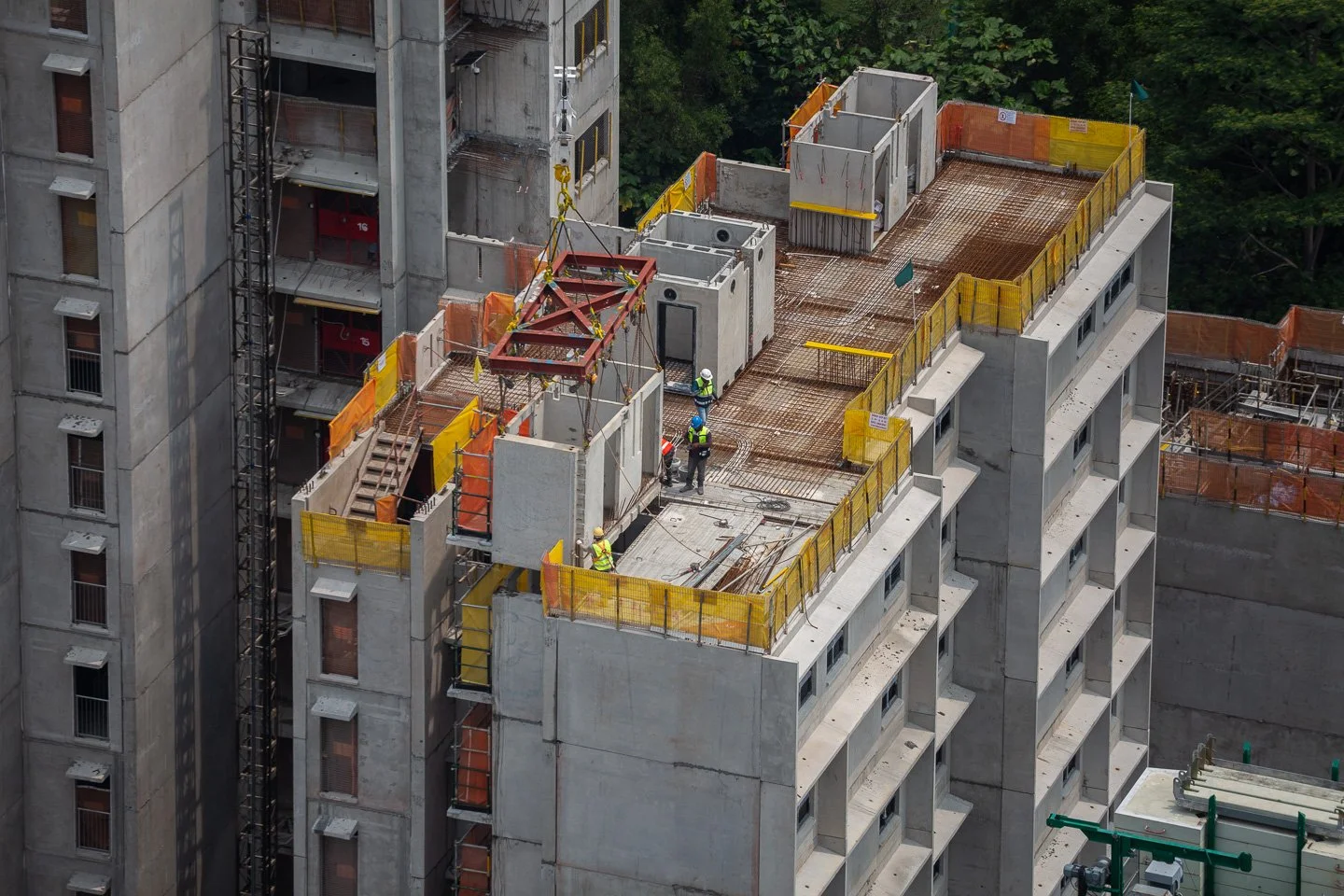
What caught my attention almost immediately was the scale of the combined modular toilet unit. I did not expect my house toilet unit is actually combined instead of seperate unit, interesting. From above, it was easy to see that this was not a small loose component being moved around site, but a substantial prefabricated element being lifted and guided into place as part of a larger structural system.
My position, on a 40-storey HDB housing, overlooking a new development, I had a clear elevated view of a live construction sequence unfolding below. My first frame was taken at 12:56pm, and by 2:40pm, the installation was completed. In total, the sequence took 1 hour 44 minutes to photograph from start to finish.
The overcast weather in that particularly afternoon timing was definitely not ideal, but that was never the main issue. In construction photography, the real priority is showing scale, progress, method and coordination clearly within a live working site.
1. Overview of a two housing units building in progress
What Prefabricated and Modular Construction Means
Prefabricated construction refers to building components that are made off site before being brought in for installation on the actual construction site. One example is the use of Prefabricated Prefinished Volumetric Construction (PPVC). Instead of building everything piece by piece in the same location using a more traditional method, certain elements are prepared earlier in a more controlled environment, then transported in and fitted into place as the project progresses.
Modular construction is a specific type of prefabricated construction where entire sections or modules are built off-site, which are then transported to the construction site and assembled together. Takes this idea further by using larger pre-made units or system-based elements that fit into the wider building process in a planned and repeatable way. These units are not random pieces. They are designed to work as part of a bigger structural and construction system, helping the project move forward with greater consistency, coordination and efficiency.
From this elevated view, the method became much easier to understand. I was watching a construction system at work, almost like Lego pieces merging together, except on a real live site with scale, structure and careful coordination behind every move.
2. Incoming modular toilet unit suspended above the site
A Better View of the Structural System
One thing I noticed very quickly was how clearly the structural system could be observed safely from above.
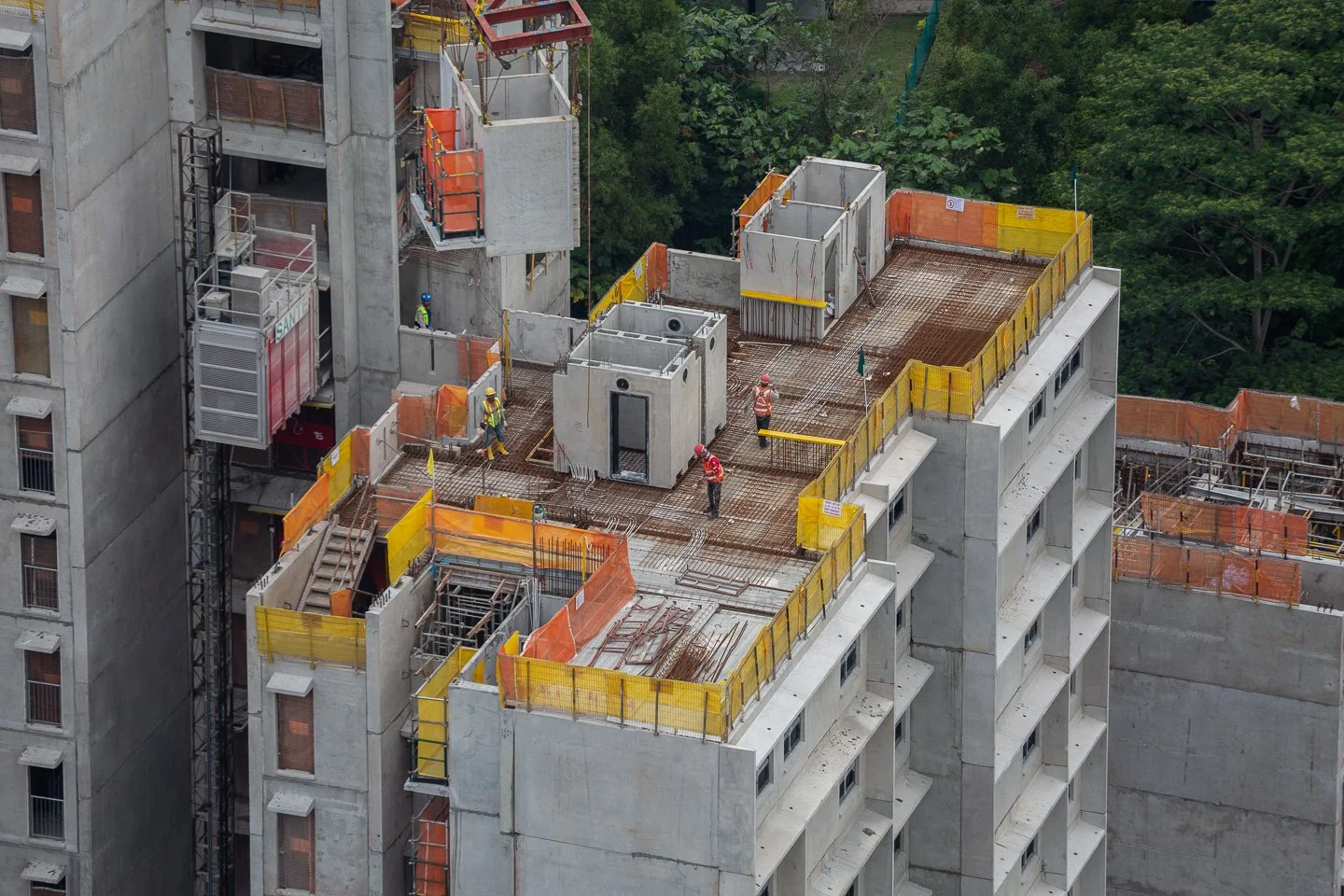
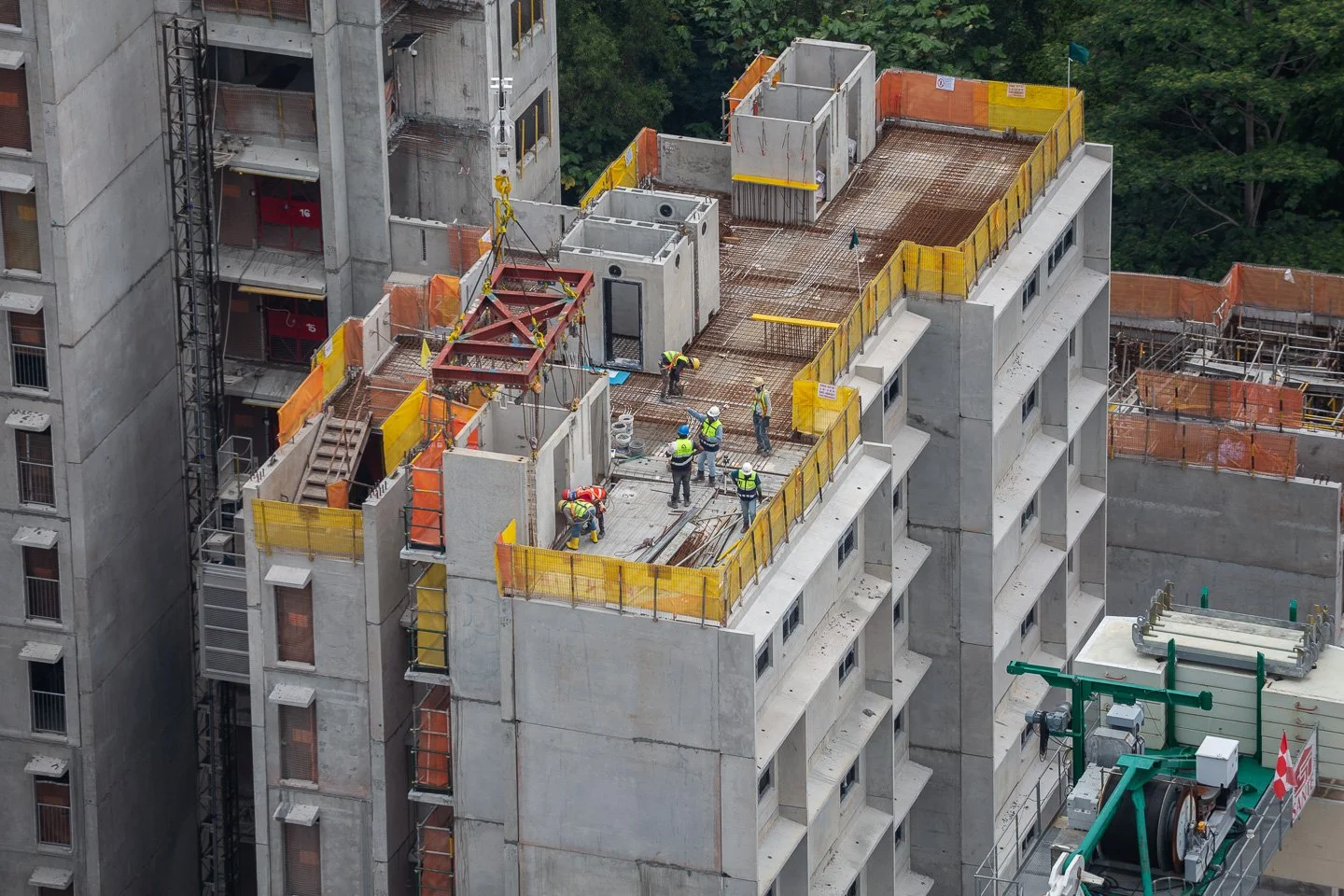
From ground level, a live construction site can feel visually crowded, one only get the sense of heavy vehicle operation on the ground. However, from an elevated position, the house layout becomes clearer. The receiving area, the deck, the workers’ positions, the structural lines and the incoming module all start to make sense together. That is where this kind of photography becomes useful for construction companies and subcontractors. It shows not just activity, but how the system comes together on site systematically.
3. Approach and positioning over the installation zone
Learning by Observing the Sequence
What I found especially interesting was how much I could learn just by watching as the site unfolds.
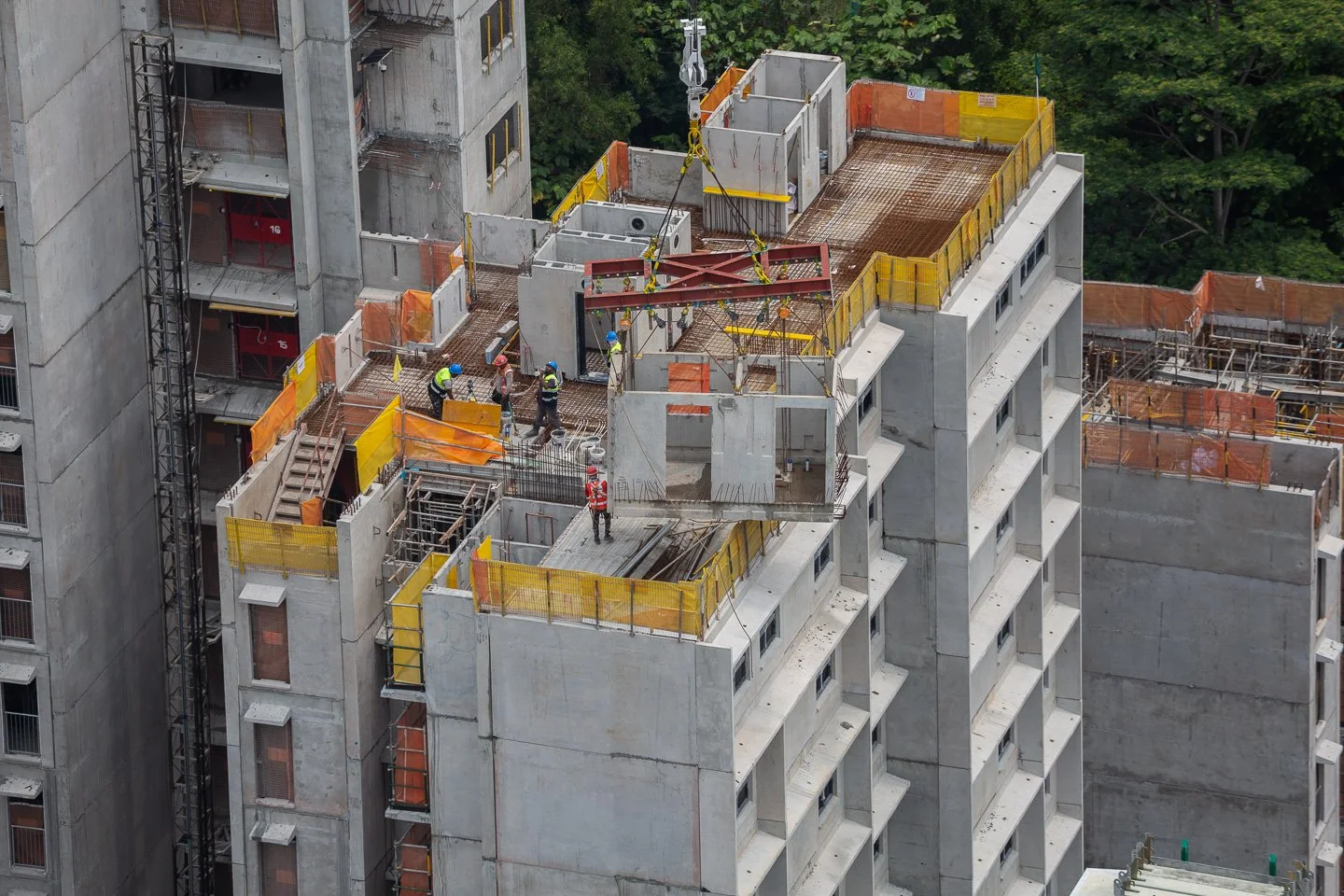
Even without a formal briefing, the sequence explained a lot on its own. I could see the preparation, the movement of the module, the guidance from the workers, the positioning, and the final placement. It was a reminder that construction photography often depends on patience, discipline and a keen eye.
Patience helps when the process takes time and the key moment cannot be rushed. Discipline matters when the light is flat and the site is busy, because without dramatic light to carry the frame, the photographer has to rely even more on timing, structure and clarity. A keen eye matters because the story is not only in the lifting and fitting itself, but in the relationships between scale, people, structure and technique.
4. Guidance and alignment by the site team
Why This Matters for Construction Companies
For contractors, subcontractors, or companies involved in modular or prefabricated systems, this kind of photography can do more than document progress.
It can show technical capability. It can show coordination. It can show how a live site operates with proper system, control, and execution. It can also help communicate the reality of modern construction methods in Singapore, especially when the goal is to present the project in a way that feels credible, organised, and visually clear.
When put together as a strong image set, these photographs can be used across corporate presentations, project showcases, company websites, marketing materials, tender submissions, internal communications, and trade show displays. They help construction companies show not only what they have built, but how they work, how they manage site operations, and how their technical systems come together on a live project.
Strong construction photography is not only about the finished building. Sometimes the more revealing story is in how the building is put together.
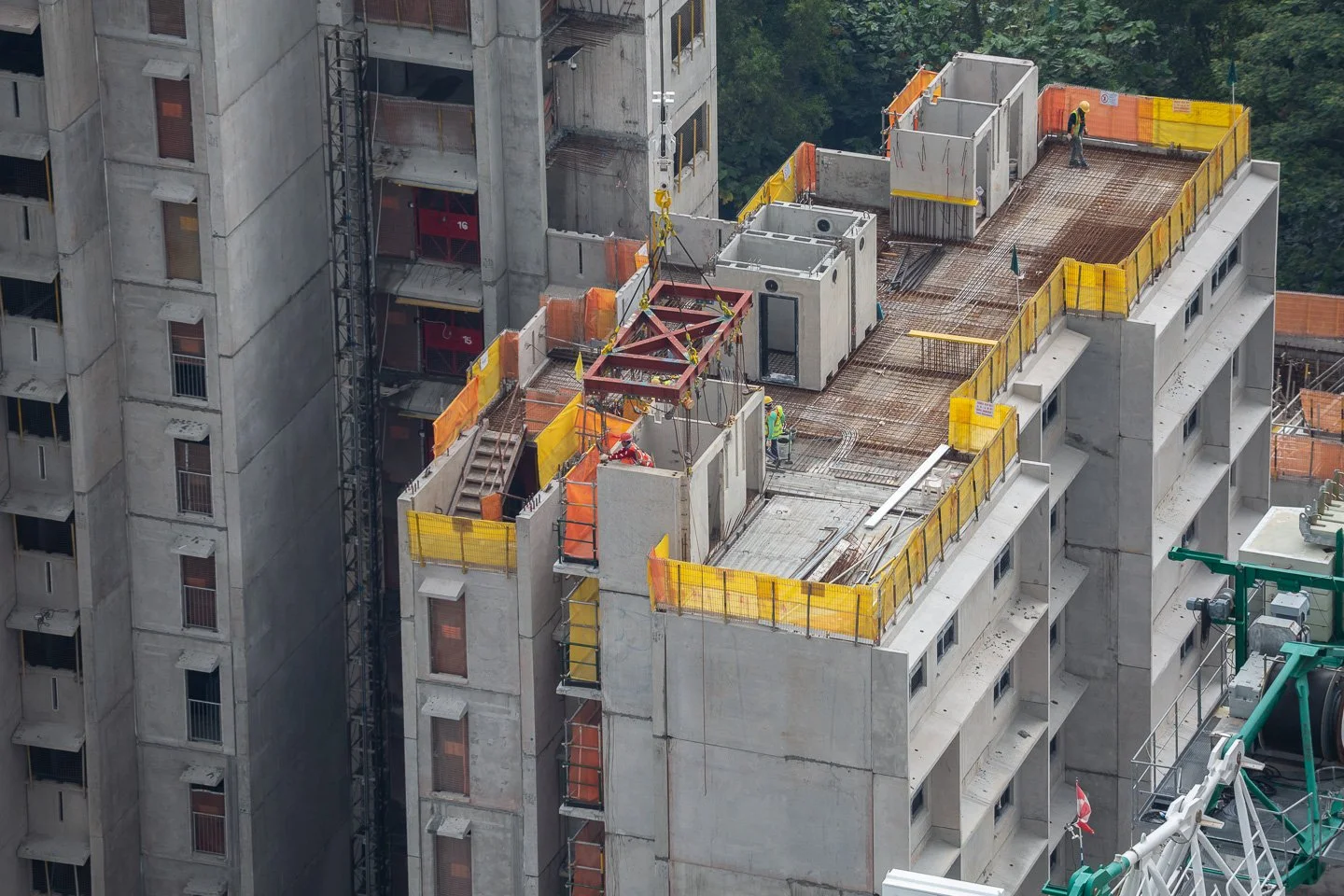
5. Lowering into place within the structural layout
Why the Elevated View Matters
This type of construction photography works especially well when there is access to a nearby building or another elevated vantage point.
An elevated position gives the photographer a practical advantage. With a stable view over the site, it is easier to observe the operation carefully, monitor changes, anticipate the next move, and stay ready to shoot at the right moment. That matters because lifting and fitting work does not always happen at a fixed speed. An industrial photographer needs patience, discipline, and a keen eye to follow the sequence properly from start to finish.
In this kind of situation, an elevated viewpoint can also be more effective than relying on a drone. A drone has battery limitations, especially in hot outdoor conditions, and the full installation sequence may take longer than expected. From a nearby high vantage point, the photographer can maintain continuous visual attention on the site, respond more naturally to changes, and document the process with greater consistency.
6. Final adjustments and coordination on deck
Photographing Methods, Not Just Moments
What stayed with me from this sequence was not only the installation itself, but the clarity and reliability of the process.
Modern construction in Singapore is increasingly shaped by prefabricated and modular systems. When photographed properly, these methods become easier to see and understand. That is where this kind of photography becomes valuable, not only for the builder, but also for clients, stakeholders, and even members of the public who may never witness such work up close. It does not just record what happened on site. It helps show how the work was carried out, how the system comes together, and how much coordination is involved behind the scenes.
I am also grateful to these unsung heroes working on a live construction site. The environment they operate in is demanding, and the work they carry out is no easy feat. Watching the sequence unfold from start to finish gave me an even greater appreciation for the discipline, coordination, and effort required on site.
If your company needs construction photography in Singapore that documents live installation, structural systems, and site progress with clarity, you can view my Construction & Infrastructure Photography services and use the contact section at the end of that page to get in touch for an enquiry.
This service is for corporate communications teams, marketing departments, industrial operators, agencies, and project stakeholders who need reliable photography in active or controlled environments.
7. Completed placement showing progress and system clearly, then repeat the process.
View the full sequence
It took 1 hour 44 minutes to photograph from start to finish.