3 - 4 MINUTES READING TIME · 29 May 2026
Everyone can hold a camera today.
That is the easy part.
The harder part is knowing how to photograph people naturally in real operational environments, especially when they are not professional models, not used to being photographed, and not always comfortable in front of the camera.
In industrial photography, this matters more than many people realise.

A female technician working at her station during the photo shoot
Industrial Portraits Are Not Always Formal Portraits
When people think of portraits photography, they often imagine a controlled setup or in the studio.
Clean background. Fixed lighting. Clear posing. Enough time to adjust everything.
Industrial portraits are different.
They are often created inside real working environments such as manufacturing facilities, logistics spaces, maritime operations, workshops, plants, engineering sites, and technical work areas. The subject is photographed in a place connected to their role, not inside a studio.
That changes the entire approach.
The portrait still needs to look professional, but it should also feel connected to the environment. The person, workstation, uniform, safety glasses, tools, machinery, vessel, warehouse, or operational background may all become part of the image.
This is where experience becomes important.
A photographer needs to understand when to direct, when to observe, and when to keep things simple. The goal is not to over-pose the person until the image feels stiff or unnatural. The goal is to create a portrait that feels respectful, relevant, and useful for the company’s visual documentation.
In industrial settings, a strong portrait should not look like the person was removed from their work just for a photo. It should show that the person belongs in that environment.
Breaking Down the Barrier Before Taking the Shot
Not everyone enjoys being photographed.
Some people become stiff the moment they see a camera. Some are unsure where to look. Some do not know what to do with their hands. Some may look uncomfortable because being photographed is simply not part of their daily routine.
That is normal.
In my experience, the first 3 to 5 minutes matter. Before taking the stronger frames, I usually need to break down the small barrier between the camera and the person.
This does not always require a long conversation. Sometimes it is a simple introduction. Sometimes it is a short explanation of what I need them to do. Sometimes it is better to begin within their own work area first, instead of immediately asking them to pose formally for the camera.
For one industrial portrait in a manufacturing setting, I photographed the subject at his own workstation.
That was his comfortable space.
I introduced myself, explained briefly what I needed, and started from there. Once he became more comfortable with my presence, I knew it was the right moment to ask him to look towards the camera for a few stronger frames.
It may sound simple.
But like watching a cooking show, many things look easy until you try doing them yourself.
The gap is experience and years of trial and error.
Familiarity With a Camera Is Not the Same as Experience With People
There is a difference between knowing how to use a camera and knowing how to photograph people well in real environments.
Technical skill matters. Lighting, framing, timing, lens choice, and exposure are all important.
But industrial portrait photography also requires people awareness.
A photographer needs to read the subject’s comfort level, understand the space, avoid making the person feel awkward, and know when the moment is ready. Push too fast and the portrait may look tense. Wait too long and the opportunity may pass.
This balance matters in operational environments because the photography has to work around the location, the activity, and the people involved.
A good industrial portrait should feel raw, professionally shot, and connected to the company’s environment. It should not feel like a generic portrait that requires to pose nicely.
This applies across manufacturing, logistics, maritime, engineering, construction, and other industrial settings in Singapore. The people inside these environments are part of the company’s credibility. They represent skill, operations, capability, and the real work behind the business.
That is also why industrial photography is not only about documenting machines, facilities, vessels, equipment, or processes. It is also about documenting the people who keep those operations moving.
For companies using images for internal documentation, corporate communications, recruitment, annual reports, sustainability reports, capability presentations, project stories, or marketing material, these portraits can become part of a stronger visual record.
I have written more about how industrial photography supports B2B brands in Singapore here:
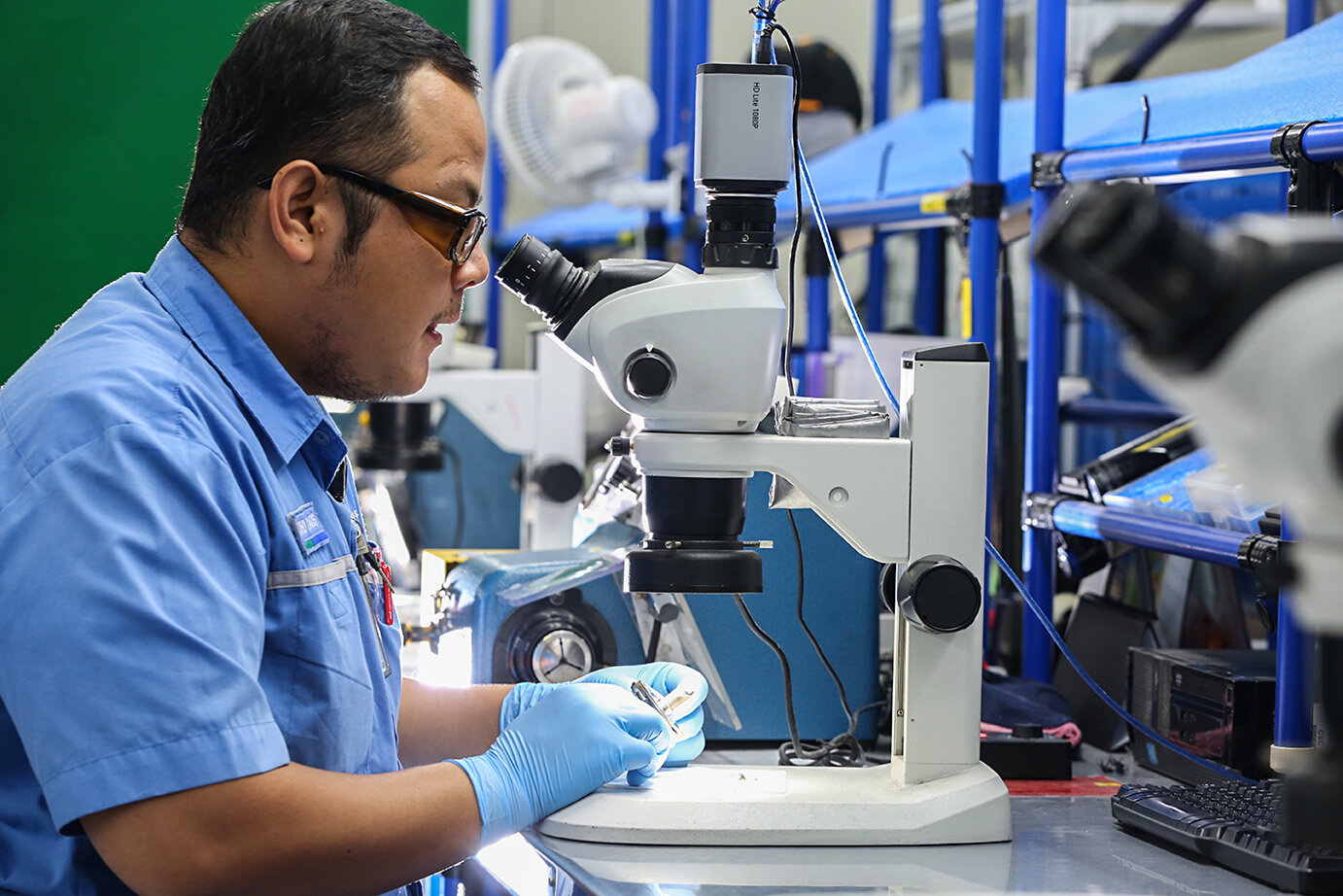
Side view of a technician working at his work station.
Industrial portrait photography is not just about taking a portrait. It is about knowing how to approach people, break down the barrier, and work within real operational spaces.
Everyone can hold a camera today, but in industrial environments, the difference is often the experience behind it.
For companies that need industrial portraits or visual documentation in Singapore, view Capture Asia Photography industrial service here: Industrial Photography Service in Singapore