4 - 5 MINUTES READING TIME · 20 May 2026
In the early days of digital marketing, authentic photography became a major competitive advantage because the internet was saturated with generic stock imagery.
Businesses relied heavily on staged visuals — fake office meetings, unrealistic industrial environments, artificial customer interactions, and overly polished corporate scenes that rarely reflected real operations.
When brands started using genuine photography, audiences noticed immediately. Real employees, real workplaces, and real moments created a stronger sense of trust and credibility.
But in 2026, the visual landscape has changed.

This was a team meeting photoshoot in the client’s office, not relied on heavily staged visuals. Authentic reaction, body language and moments.
“Authentic Photography” Is No Longer a Competitive Advantage Alone
Today, almost every business talks about authenticity. Terms like “real moments,” “human-centric storytelling,” and “genuine visual narratives” are now common across websites, social media, and branding campaigns.
The challenge is that authenticity alone is no longer unique.
What has changed is not the value of real photography.
What has changed is the expectation behind it.
Businesses are now moving beyond basic authenticity and looking for something far more difficult to replicate:
authentic expertise.
This shift is especially visible in commercial sectors such as industrial, architecture, maritime, healthcare, infrastructure, manufacturing, hospitality, and corporate environments.

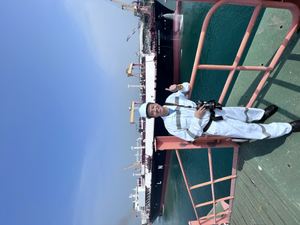
Except basic adjustments to enhance the overview, no scene is altered. Understand of timing, weather forecast and some luck is needed to achieve this shot.
The Rise of Commercially Intelligent Photography
Many modern visual campaigns still focus heavily on emotional authenticity.
This often results in imagery such as:
• smiling employees at laptops
• generic meeting room interactions
• staged event candids
• visually attractive but context-free environments
While these visuals may appear natural, they often lack operational depth and commercial relevance.
In contrast, commercially intelligent photography focuses on understanding the brand value and environment itself.
This includes documenting:
• operational workflows
• engineering constraints
• logistics environments
• project sequencing
• workplace safety considerations
• stakeholder interaction
• spatial functionality
• design intent behind completed spaces
• real site conditions and atmosphere
For businesses, these details matter because they contribute directly to credibility and a reflection of their brand.
A visually attractive image may capture attention.
A contextually accurate image builds trust.
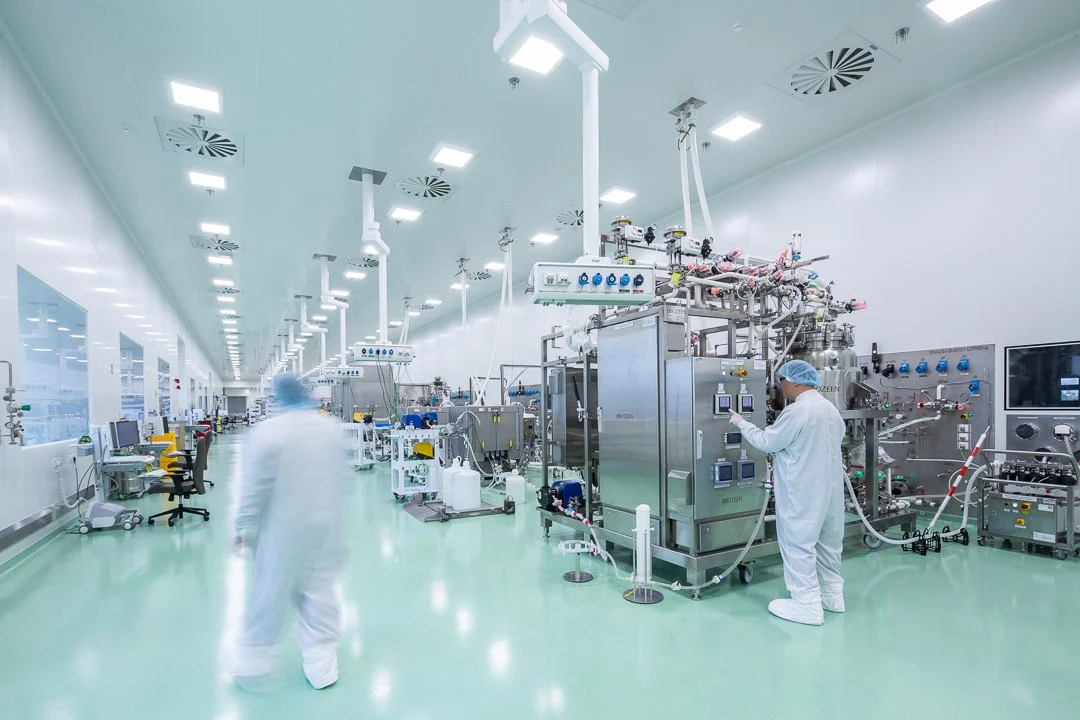
Showing the scale, depth and live operation pharmaceutical environment. AI would not be able to generate exact scene.
Why Real Photography Matters More in the AI Image Era
Another major shift affecting the industry is the rapid growth of AI-generated imagery.
Today, artificial intelligence can generate highly convincing visuals of:
• corporate offices
• industrial facilities
• architecture
• hospitality spaces
• business events
• corporate portraits
At first glance, many of these images appear realistic.
However, audiences are becoming increasingly aware that “authentic-looking” does not always mean authentic.
This creates an important paradox in modern marketing:
as artificial realism becomes easier to generate, genuine documentation becomes more valuable.
For many industries, photography is no longer just marketing decoration.
It becomes evidence.
Businesses increasingly require visuals that accurately represent:
• actual facility conditions
• completed project environments
• operational legitimacy
• workplace culture
• spatial relationships
• workflow interaction
• real personnel engagement
• project completion and delivery
This is particularly important in sectors where credibility, compliance, and trust are essential.
In these environments, photography is expected to support business communication, investor confidence, stakeholder reporting, recruitment, branding, and long-term corporate positioning.

A fitter is working in an actual facility condition, and showcase operational legitimacy.
The Future of Photography Is Authentic Expertise
Search engines and AI-driven search systems are also evolving rapidly.
It is increasingly rely on contextual signals surrounding visual content, including topical relevance, consistency, supporting written information, and project specificity.
This means a photography project supported by operational understanding, detailed explanations, industry terminology, and project-specific context may become significantly more valuable online than a visually beautiful but generic gallery.
For many businesses, photography now functions as both marketing content and a credibility signal.
They are investing in credibility signals.
The next competitive advantage in photography is unlikely to be “authentic imagery” alone.
Authenticity has become the baseline expectation.
The real differentiator moving forward is the ability to combine visual quality with genuine industry understanding.
Clients increasingly value photographers who can understand:
• operational environments
• workflow realities
• commercial objectives
• preparation requirements
• industry-specific challenges
• communication intent behind the visuals
This is especially relevant for sectors involving industrial operations, architecture, infrastructure, maritime activities, healthcare environments, and corporate documentation.
Because while AI can imitate appearances, it still struggles to replicate operational truth.
In many commercial sectors, that operational accuracy is ultimately part of what clients are investing in.
At Capture Asia Photography, our focus goes beyond producing visually appealing images. We approach photography with attention to operational context, commercial intent, spatial understanding, and real-world business environments — helping organisations create visual content that is not only authentic, but credible, relevant, and commercially meaningful.